
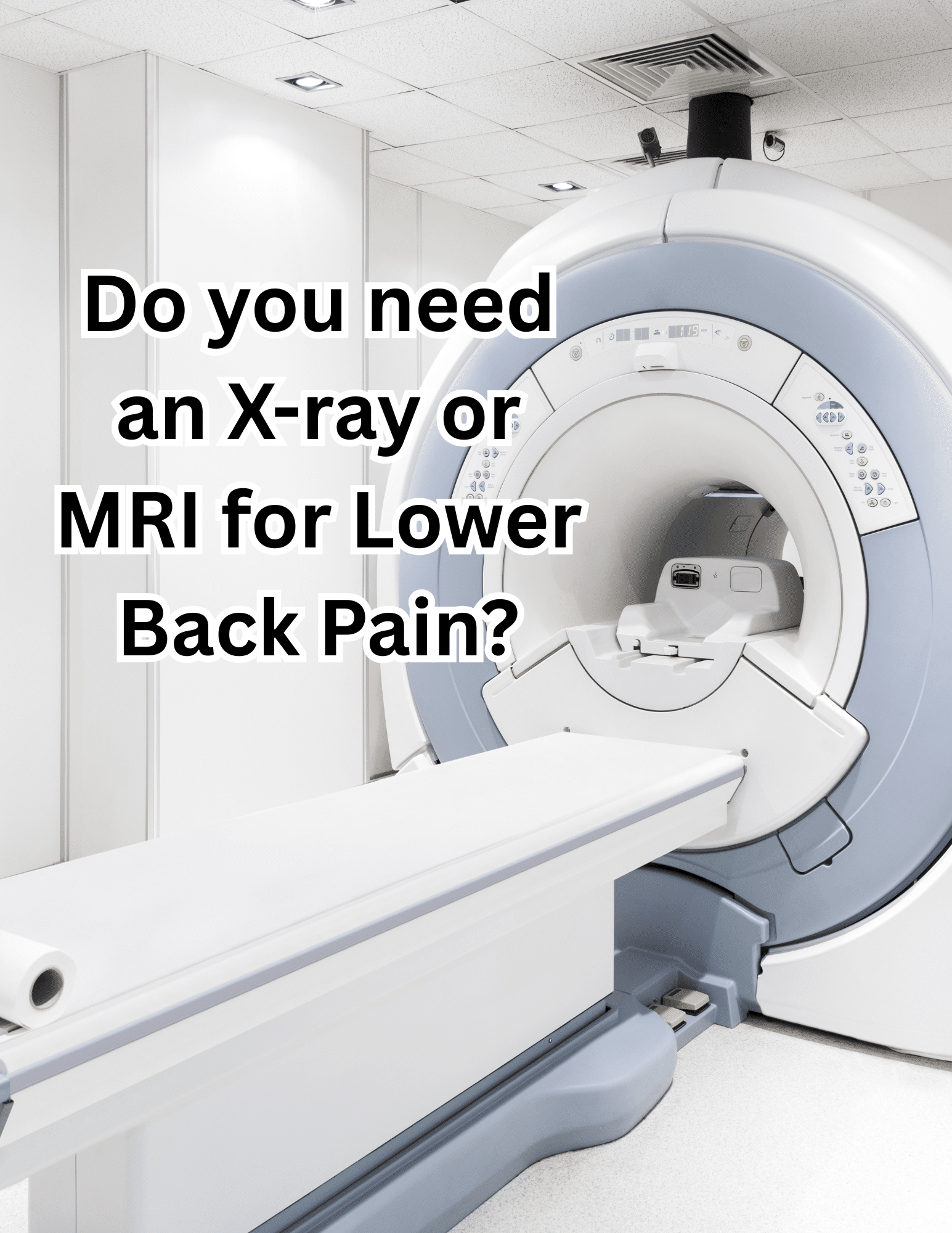
This is because Imaging findings do not correlate well with what is the cause of pain. Therefore they often cannot definitively determine that a certain tissue damage found on X-ray or MRI is the source of your pain. Furthermore, most of the time the information they do give do not give any meaningful information that would affect how we treat it. Imaging rarely changes the course of conservative care.
Even if an MRI shows degenerative disc disease, disc bulging, protrusion, or annual fissure, these findings are very common in asymptomatic populations.
This Systematic Literature Review by W. Brinjikji in 2015 found the following:
“Thirty-three articles reporting imaging findings for 3110 asymptomatic individuals. The prevalence of disk degeneration increased from 37% of 20-year-old individuals to 96% of 80-year-old individuals. Disk bulge prevalence increased from 30% of those 20 years of age to 84% of those 80 years of age. Disk protrusion prevalence increased from 29% of those 20 years of age to 43% of those 80 years of age. Annular fissure prevalence increased from 19% of those 20 years of age to 29% of those 80 years of age.” https://www.ncbi.nlm.nih.gov/pmc/articles/PMC4464797/
If “abnormal” MRI findings are this common in individuals without any lower back pain or symptoms, it warrants caution in interpreting MRI results with individuals who do have back pain.
It requires a thorough subjective history and physical exam to determine if the MRI findings are relevant, and even then, it is not always so concrete. Pain is complex and multiple factors can play a role much beyond just what an MRI or X-ray may show.
But the good news is, these findings rarely if ever will affect the treatment plan. We treat the individual and how their pain presents, not the MRI.
Most often the causes of lower back pain can include your lifestyle factors including your work, what you do for fun, what you do in the gym, your sleep and diet, and your strength, mobility, and movement patterns. And all of those things can be addressed!
There are just a few rare signs to be aware of that may indicate you may need imaging.
Imaging is only necessary if we suspect any of the following:
Fracture -Major trauma (Car Accident/major fall) or Stress Fracture (more common in adolescent athletes with low back pain) would be the most common causes.
Cancer – Typically will present with other non orthopedic symptoms, but requires medical screening to determine if this might be present.
Cauda equina – Compression of sacral nerve roots vital to bodily functions. The hallmark symptoms of this are bowel or bladder dysfunction, or numbness in the saddle region (perineum). This is very rare.
Outside of that, its not necessary!
If you have questions about this, don’t hesitate to reach out and we would be happy to discuss your situation in more detail and answer any questions you might have. Schedule your Free Discovery Call here.