


With exercise prescription, dosage is everything.
As they say, both the cure and the poison are in the dosage.
Common mistakes in rehab are doing too little or doing too much.
If its too easy, it is ineffective, if its too much you end up with flare ups or injury.
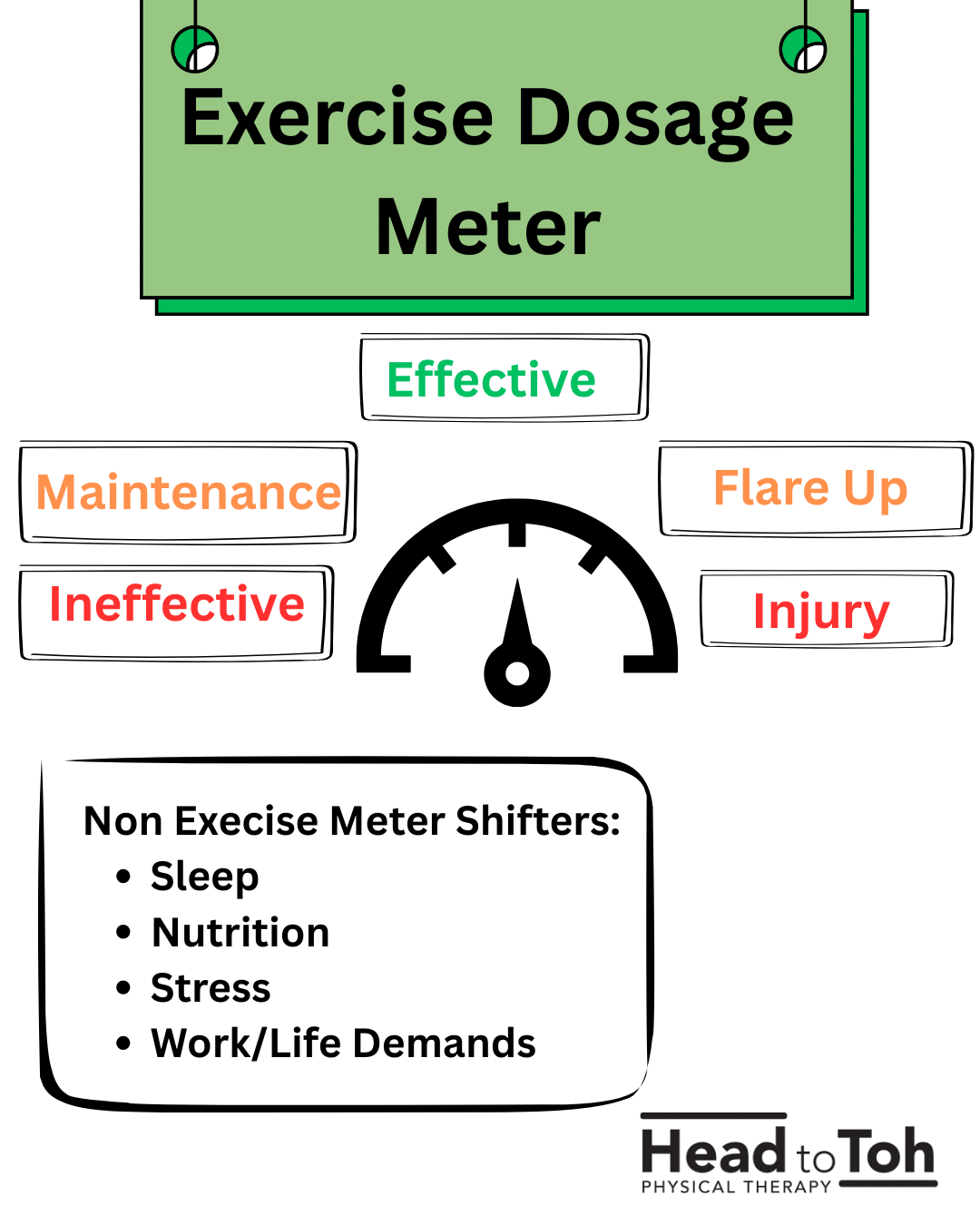
Getting it just right is the trick.
And this scale should move over time, in that as you do the work and build strength and mobility and capacity, how much you need to do should increase.
This applies for both general training and rehab.
And I made note that the dosage is not just decided by strength. Your “non exercise meter shifters” include sleep, nutrition, stress, and work/life demands.
If any of those are poor, it can affect how much dosage is appropriate. So for someone who has a very demanding job, it might mean a consistently lower dosage than would be prescribed were they in a different job. Or an athlete in season would get lower dosage than off season. Or for someone who just had a stressful week and poor sleep for a few nights, it may be appropriate to adjust the program for just that given week.
Dosing exercise appropriately at the start and progressively over time is absolutely key to good rehab.
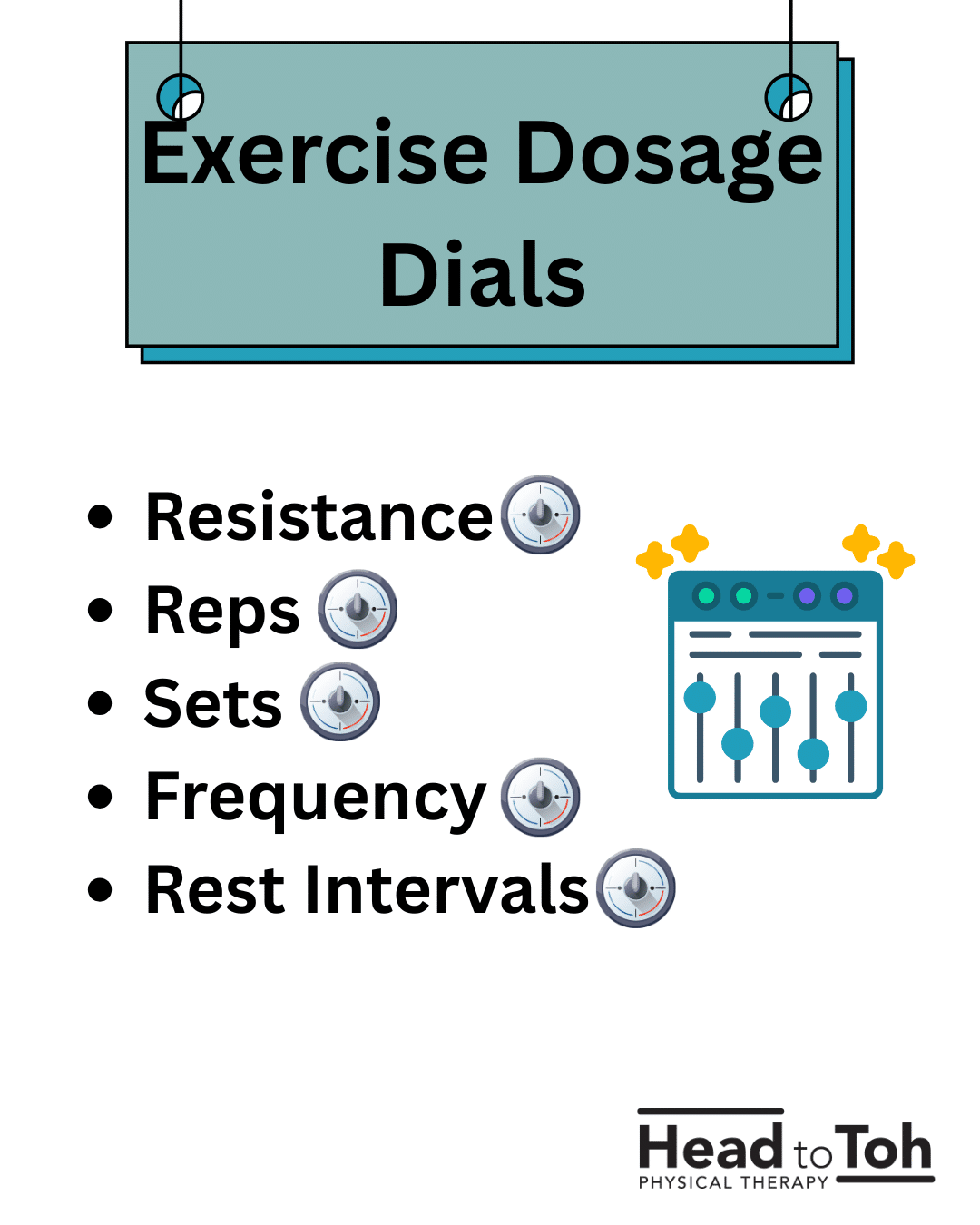
The most obvious “dosage dial” is resistance.
I measure resistance by reps in reserve. This means how many reps from failure were you at the end of your set. This can be a tricky one with rehab especially early on because of pain. But I consider their training history and that can give a pretty good idea of where to aim. Over time we test strength at varying rep ranges to get a closer gauge.
Reps and Sets affects total volume, or total work done. Even at lower intensity, a lot of volume can cause a lot of fatigue and recovery cost.
High rep sets tilts the scale towards hypertrophy and endurance, and low rep tilts the scale towards strength (both work all of it, just to different degrees)
Frequency or number of training days also affects total volume. Also how you space out the week affects how you recover between sessions. Push Pull Legs, upper/lower, or full body splits are all fine options depending on your goals.
Training the same muscle groups on consequent days can be very hard to sustain, unless it is at a very low intensity. Generally I prescribe strength work every other day. But we also consider other training like cardio or sport, and make sure they do not interfere with each other.
Lastly rest intervals affect how difficult subsequent sets are. Shorter rest intervals means more fatigue in subsequent sets, but also less reps performed. Longer rest means less fatigue in subsequent sets, typically resulting in more reps performed.
So shorter rest can artificially create more fatigue in the moment, but done a lot over time will typically result in less total strength output.
Using supersets or circuits is very time efficient and can give a “metabolic” stimulus by elevating your heart rate.
But If the goal is pure strength on say a compound lift like a back squat, I give at least 2-3+ minutes of rest between sets.
With accessory or isolation movements where the goal is endurance, hypertrophy, or mobility, I will often encourage supersets.
In other words I use the level of the other dials, namely the intensity of the exercise to do decide if it is appropriate to superset or not.
