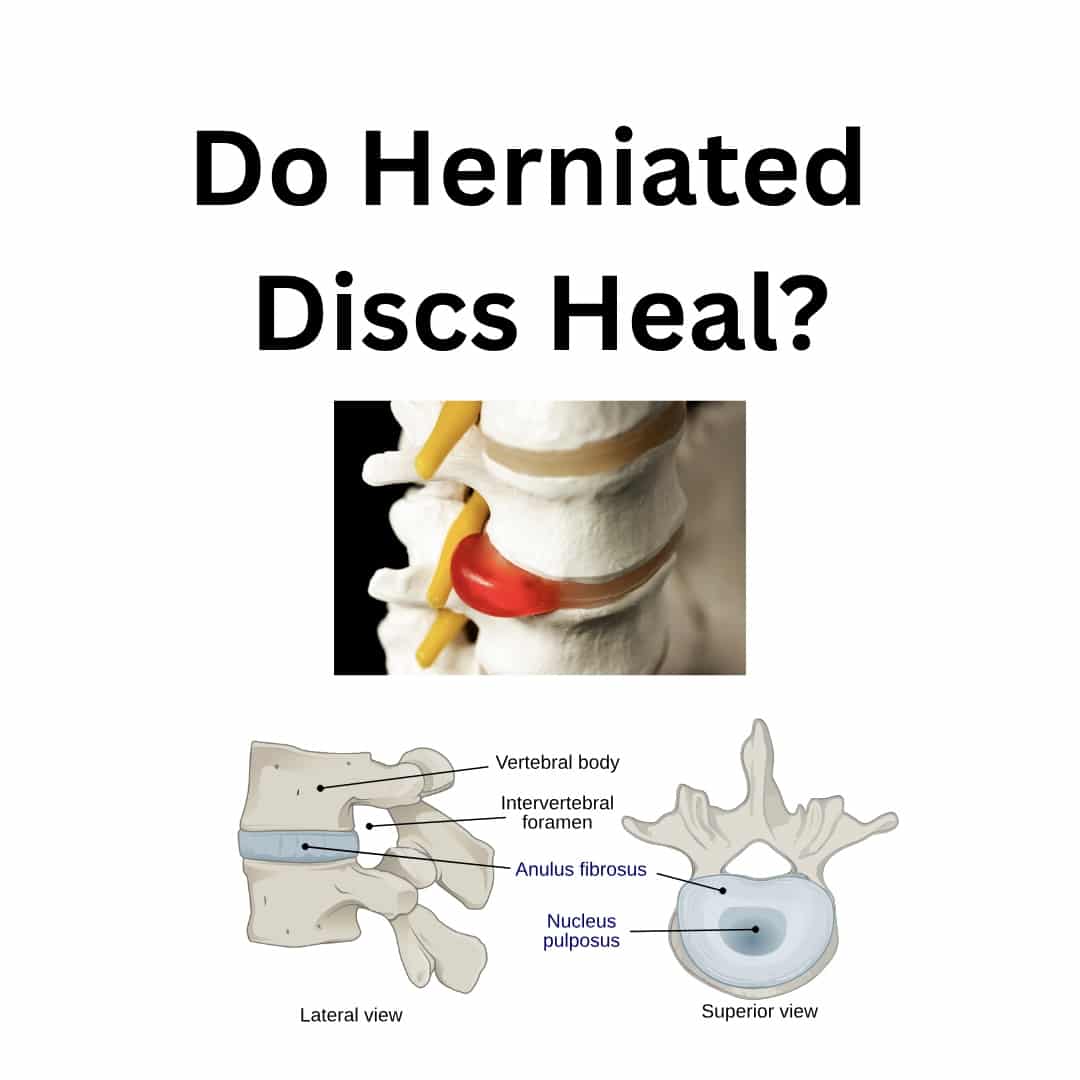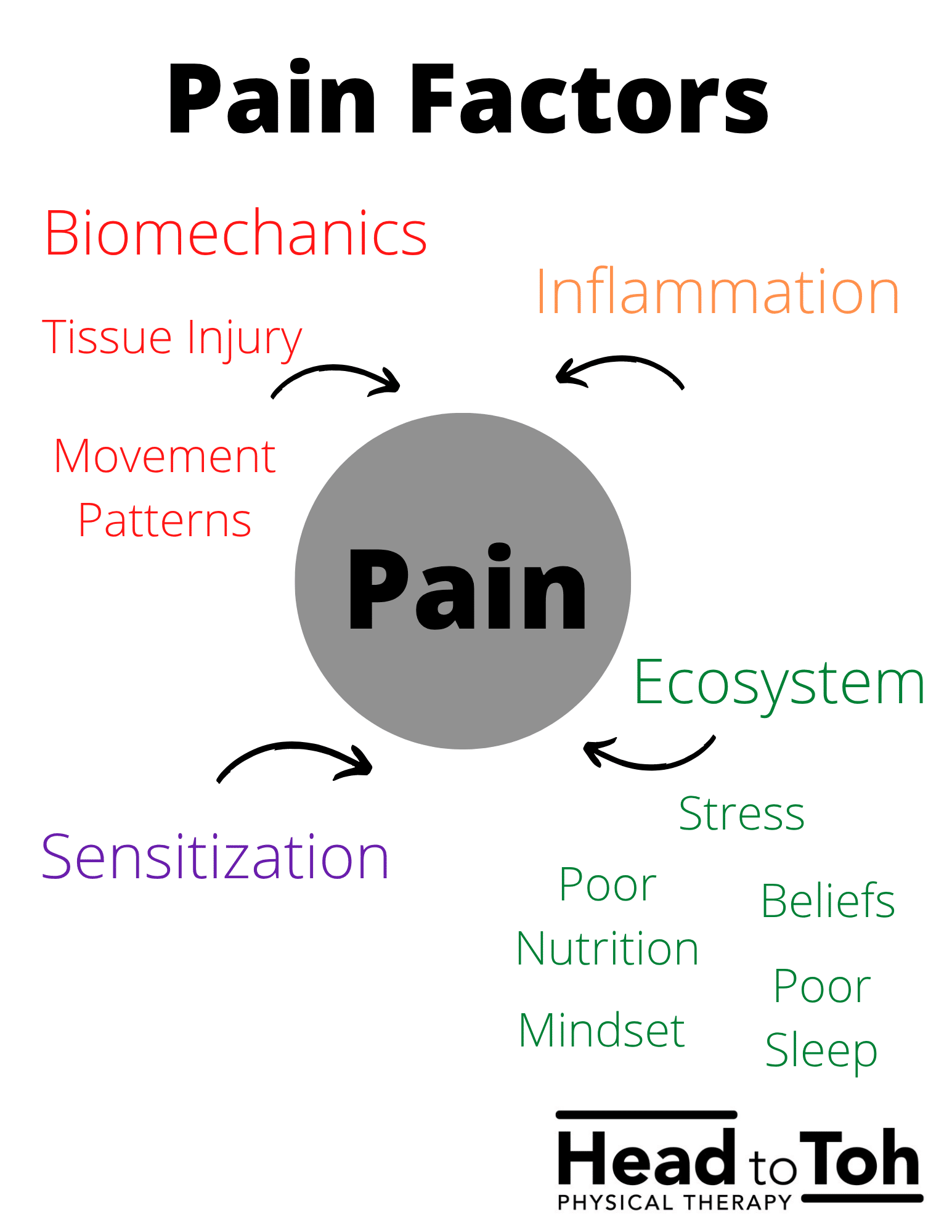

Most people think that pain means something is damaged – a muscle is strained, a ligament is sprained, a disc is herniated, a joint is degenerated etc.
And while that is true some of the time, it is definitely not true every time. In fact, most of the time, pain is much more complex than that.
There are hundreds of other factors that can affect pain. And in this article I am going to explain 5 of the big ones in some depth. These principles apply to pain in general, but I am going to give specific examples for lower back pain.
When you understand pain more holistically from this perspective, it will help you better know how to treat it, and overcome it.
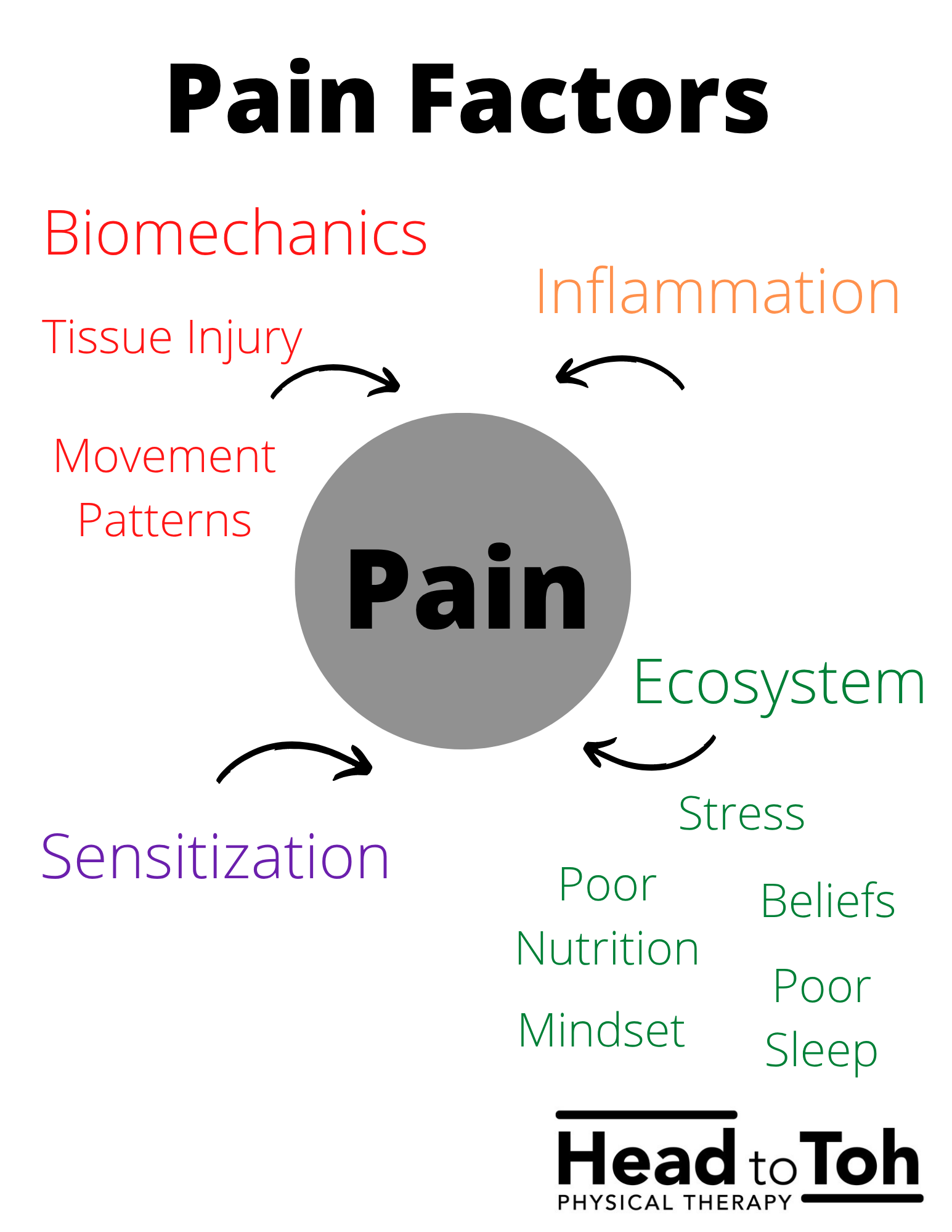
Some examples of tissue injury relevant to lower back pain include:
Injury to any of these structures in your back can potentially contribute to pain.
This is the most classic and commonly held explanation for pain.
But ironically, specific tissue injury is actually the least reliable mehanism for explaining most lower back pain, especially chronic low back pain.
Diagnosing tissue injury can be helpful in understanding how pain may initially start with some new injuries. But in chronic lower back pain, tissue injury is rarely linked to be a driver of the pain. (1)
Furthermore, the presence of tissue injury without causing any symptoms in the lower back is very well documented. (2)
You may be wondering if injured structures are most often not the cause of chronic back pain, what is?
This is what I explore in points 2-5.
Pain is like an alarm system. It is our built in protective alarm that alerts us of danger so that we can stay alive. A well functioning alarm system does its job in that it alerts us of threats so that we can take our hand off the hot stove or our foot off the sharp pin on the floor and avert danger. Subconsciously it alerts our bodily systems of infections and injuries so that it can get to work fighting and healing those threats.
But sometimes the alarm can be on high alert and become hyper sensitive. Imagine if you had an alarm system on your house that went off every time the wind blew a little, or a mosquito flew into the window.
We have an alarm system that does inform us of real danger. But there are hundreds of factors that can dial up the sensitivity such that it can blare the alarm in the absence of any real danger.
And to be clear, this does not mean that pain is all in your head. It does not mean that your pain is imaginary. And it does not only apply to severe cases or complex chronic pain. It applies to every living human who experiences pain.
And this might be one of the most underrated factors of pain in general, but specifically in lower back pain.
The phenomenon of sensitization happens throughout your nervous system in peripheral nerves, but also centrally in your spinal cord and brain. This is a well documented phenomenon in chronic pain. (3,4)
Several different things can lead to a sensitized nervous system such as:
In short, sensitization happens when the nervous system is convinced it is not safe, so it does not allow the alarm to dial down as a protective mechanism.
This is very important to understand because very often with chronic lower back pain, the pain can be inoordianate to the actual danger present. Understanding when this is happening can help you start to take steps to disarm the alarm.
For many people with chronic lower back pain it will be much more helpful to consider why your nervous system is sensitized, instead of endlessly chasing the 1 mystery structure that is causing pain.
There are 2 subcategories of movement patterns that can contribute to pain:
Overuse is simply doing more than your body is ready for. So you can say that either you did too much too soon, or you did not have enough strength or mobility to do what you asked of it, or both.
Compensation patterns can contribute to overuse. If other joints (eg: hips and knees) aren’t doing their job, the lower back can be predisposed to take on more of the load.
Examples of compensation patterns:
–Weak or tight hips that result in the back doing more work
-Weak knees that result in a disposition to bend at the back more than at the knees
Underuse or prolonged inactivity can also contribute to pain.
Inactivity leads to muscle atrophy and loss of mobility, decreased blood flow, and sometimes increased inflammation and sensitivity.
Inflammation is a cellular response of the body that is intended to heal.
So it is actually an important function that we need.
But when inflammation is chronically elevated well beyond the time needed to heal tissues or clear infections, it can cause problems.
Inflammation can cause pain via mechanical pressure from increased swelling and/or chemically via cells that raise nerve sensitivity.
In many ways, chronic inflammation can be seen in a similar way as the sensitive nervous system: It is an overactive and overprotective alarm that is causing more harm than good.
Here are some potential drivers of chronic inflammation:
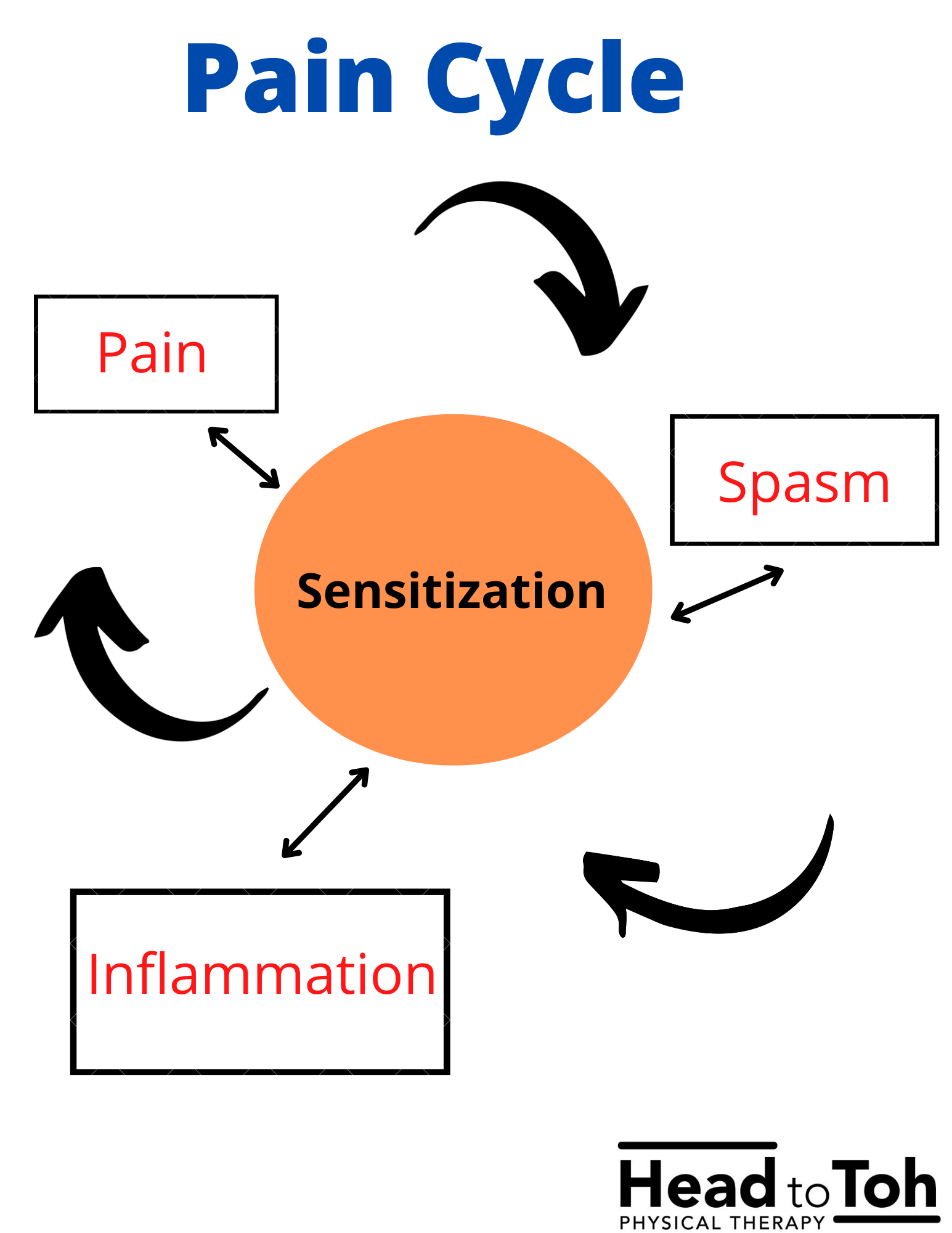
As you can see by now, a lot of these pain mechanisms can interact.
This chart is a visual representation of a way that certain factors can interact, and a fairly common pattern I see.
Often times the various factors can feed into each other, which sometimes makes recovery difficult. But identifying which components are relevant is the first stop in slowing the negative momentum cycle, and strating on the path of positive momentum.
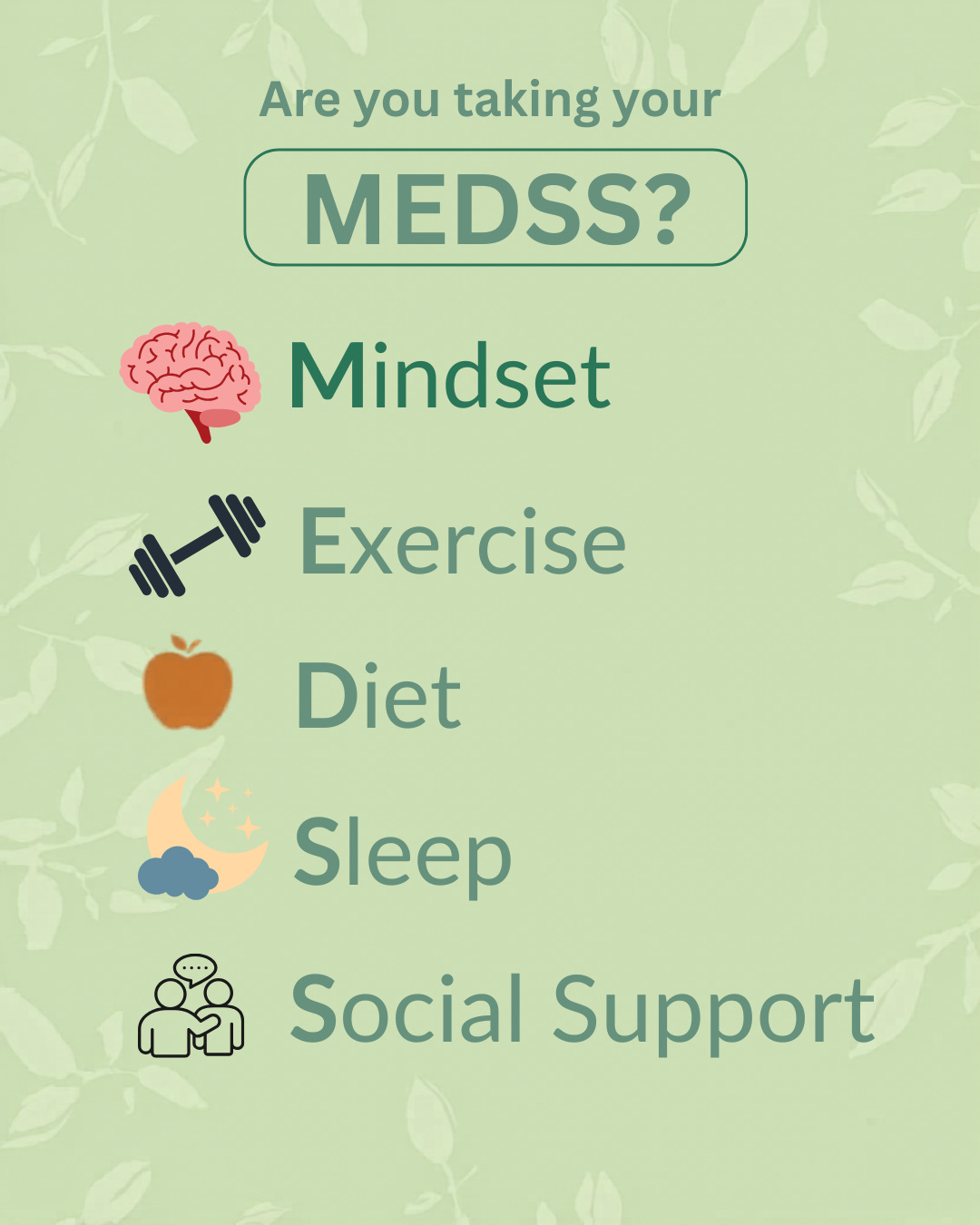
When the general ecosystem of your health is under duress it can do 2 things to pain:
I use this acronym to succinctly explain the key elements of the health Ecosystem: MEDSS
Once we understand your pain and what can potentially be causing it, we have guidance on where to start.
Treatment is a whole other conversation, but I am going to give you some example of what treatment could look like, depending on what is driving the pain the most:
I hope this guide helped you develop a little more clarity on what could potentially be driving your chronic lower back pain.
If you have questions about your unique situation or want a personalized assessment, reach out for a Free Discovery Call on our website so we can learn more about your unique story.