
Being diagnosed with a herniated disc in your lower back can feel scary. But the good news is they do heal. And even when they don’t, there is a good chance it will stop hurting with time.
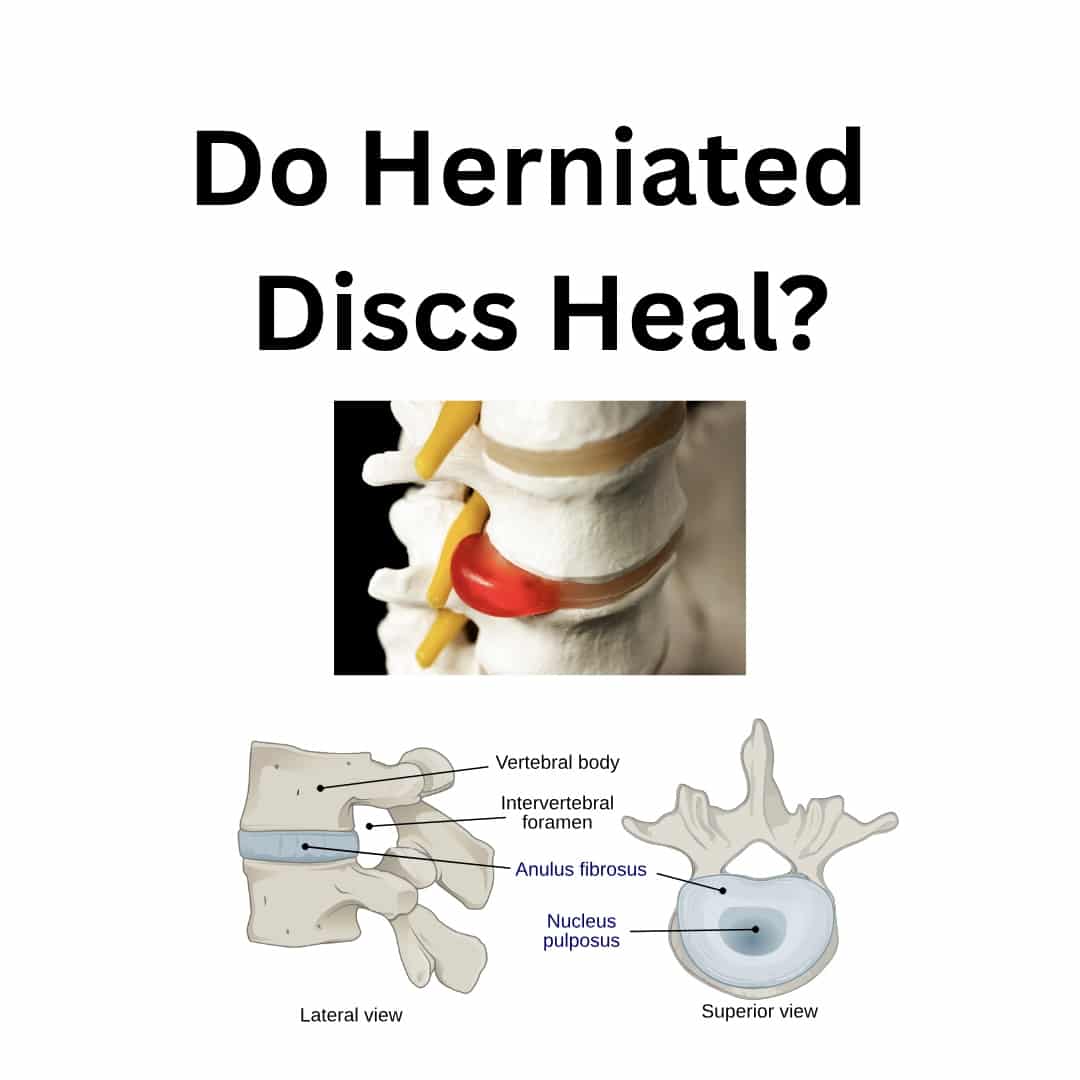
Here is a brief review of the anatomy of what is happening with a disc herniation.
You spine has discs between each spinal bone that is made up of thick outer ring of cartilage called the annulus fibrosis, and an inner “gel-like” center called the nucleus pulposus.
And your lower back has 5 of these discs that are labeled L1-L2, L2-L3, L3-L4, L4-L5, and L5-S1, with each number corresponding to the level of Lumbar vertebrae, or bones.
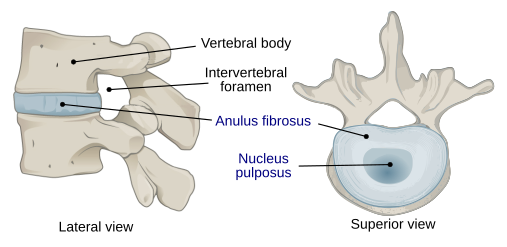
A disc herniation is when that inner gel like substance pushes out against the outer rim of cartilage. Sometimes this can be harmless and cause no pain at all, sometimes it triggers an inflammatory response that can cause pain, and sometimes it can press on nearby nerves that can cause symptoms in your legs such as numbness, tingling, or shooting pain. (1, 2, 3)
Symptoms you may experience include:

Basically the bigger the herniation, the higher chance of spontaneous healing. The theory behind this is that a larger herniation may trigger more of an inflammatory response. And the inflammatory response is what is repsonsible for absorbing the material that herniates.
They took 284 subjects who had a disc herniation and sciatica and did an MRI initially, and then 1 year later. What they found was that over 80% of people had a resolution of symptoms whether or not their disc healed. In other words, even though the herniation still showed up on MRI 1 year later, that did not predict symptoms. People got better either way!
What all of this this tells me is that the human body is incredibly resilient.
Discs do heal at rates as high as 96% of the time. And even when they don’t “heal”, symptoms resolve over 80% of the time.
Sometimes surgery can be indicated, such as when there are red flag symptoms such as bowel/bladder incontinence, saddle anaesthesia, or progressive and significant muscle weakness in the legs. If you have any of those red flag symptoms it is important you seek out urgent medical attention. Other non urgent indications for surgery include pain that does not resolve with conservative care.
But the evidence is quite clear that surgery is not needed most of the time.
“Conservative care” refers to any management that is non surgical, and that typically includes Physical Therapy.
Your body definitely heals on its own, the science is clear on that.
But Physical Therapy supports that process through individualized and progressive movement plans that helps decrease pain and inflammation, and improve range of motion, strength, and overall capacity and function.
Working with Head to Toh we will take a thorough look at your pain and injury history to understand all relevant contributing factors to your pain, so we can make a plan unique to your situation and personal goals.