
Wish you could still be in the gym despite dealing with lower back pain?
Understanding the “Squat/Deadlift Spectrum” can help guide you.
This is a spectrum I use to help my patients with lower back pain make decisions around their training and rehab.
The squat and the deadlift are two fundamental compound movement patterns used commonly in the gym, and for good reason.
And while the squat and the deadlift are quite similar, they differ in terms of which joints in the body are stressed the most, particularly across the lower back, the hips, and the knees.
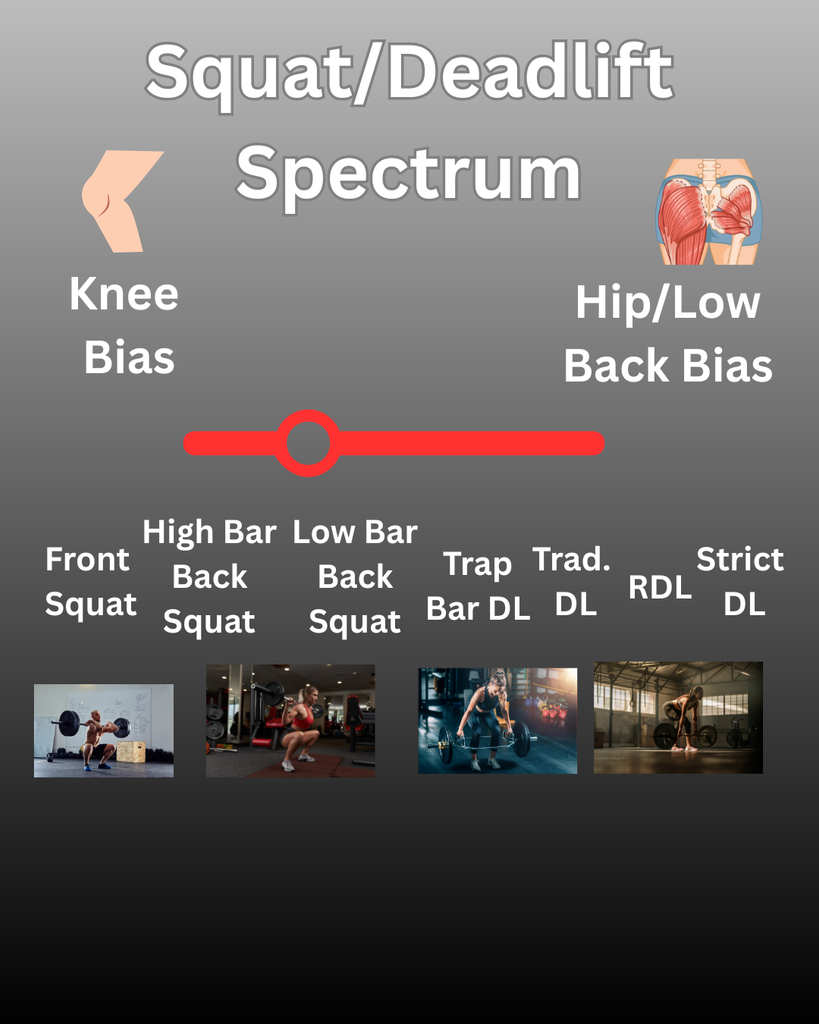
Squats tend to bias the knees (and the hips in varying amounts depending on technique).
Deadlifts bias the lower back (and the hips in varying amounts depending on technique).
There are different types of squats and deadlifts that each train the lower back, hips and knees in different amounts. In other words, certain types bias the knee more or the hip and lower back more etc.
And depending on what we are trying to do at any given time, we use exercise selection as a dial adjustment of where we want the load to go.
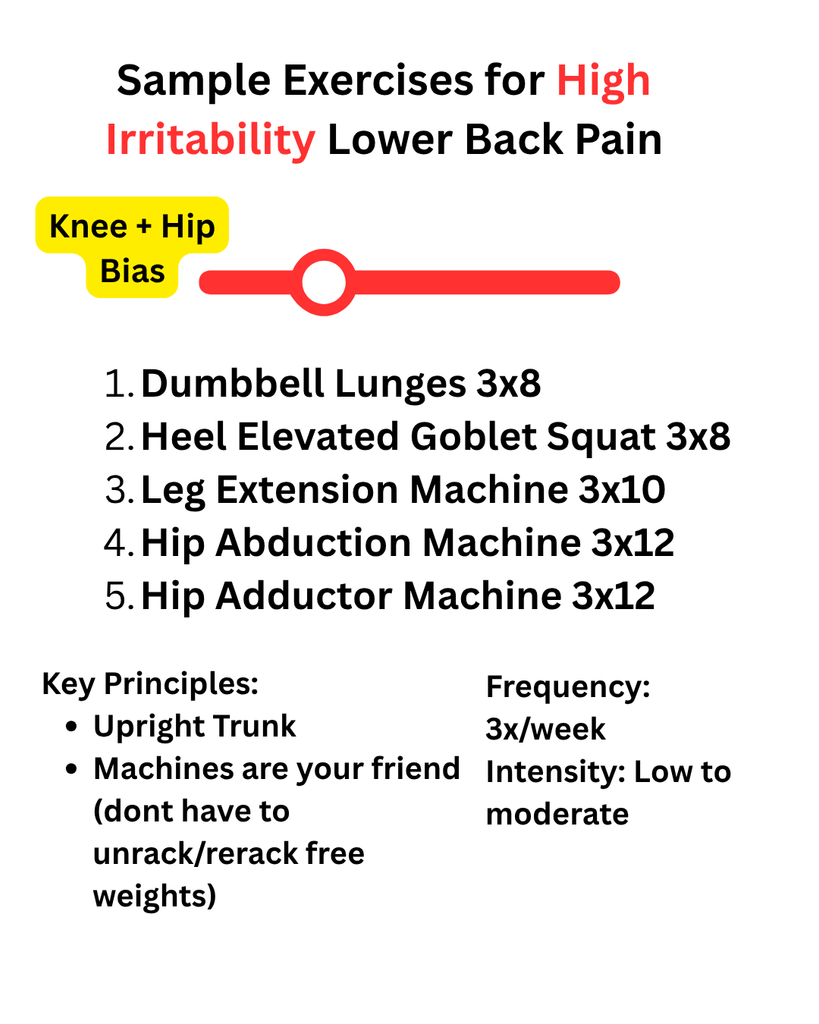
So if you want to bias knee and hip loading initially while we wait for back symptoms to settle a bit, then we lean into squat variants. But soon as the back can tolerate it, you bet we’re working in deadlift variants too in order to intentionally challenge the lower back.
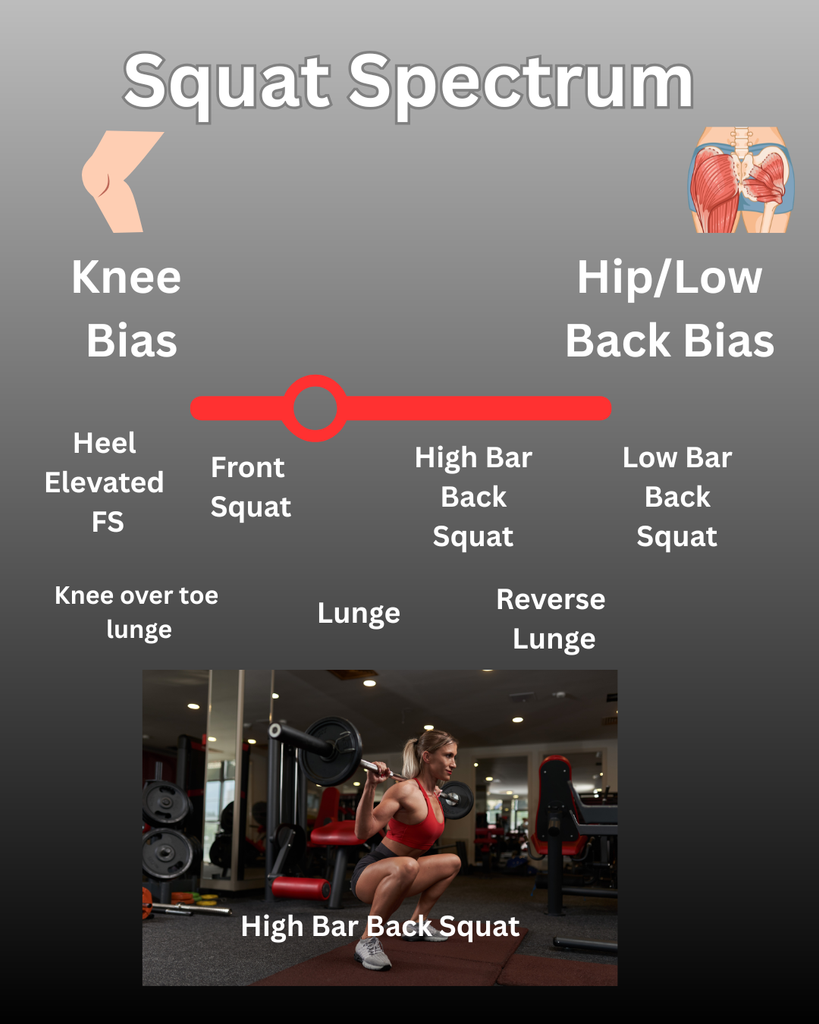
The opposite is true for knee injuries. So if you want to bias the low back and hip while the knee is angry, then leaning into deadlift variants is a smart place to start. But same thing. As soon as the knees can tolerate it, we gradually work in squats as well.
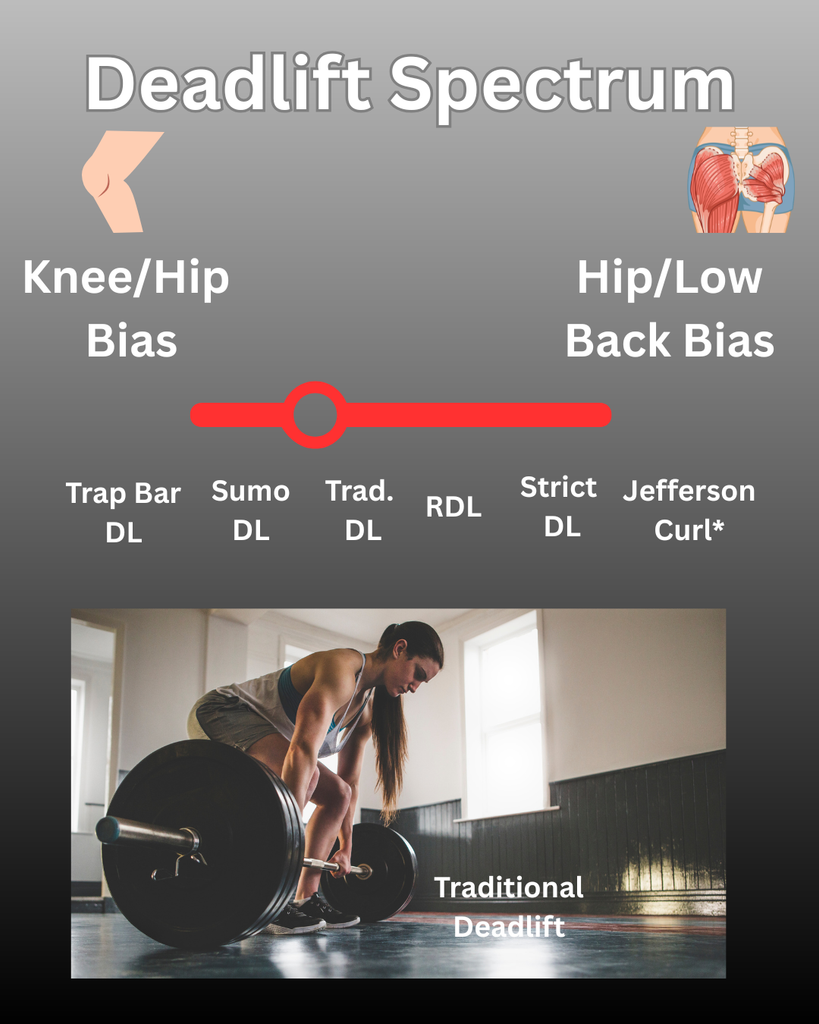
This is a guide I use to help guide decision making in exercise selection for Rehab.
Exercise is a tool for training and recovery. And understanding the principles of exercise helps us make informed decisions around which types of exercise can help the most.
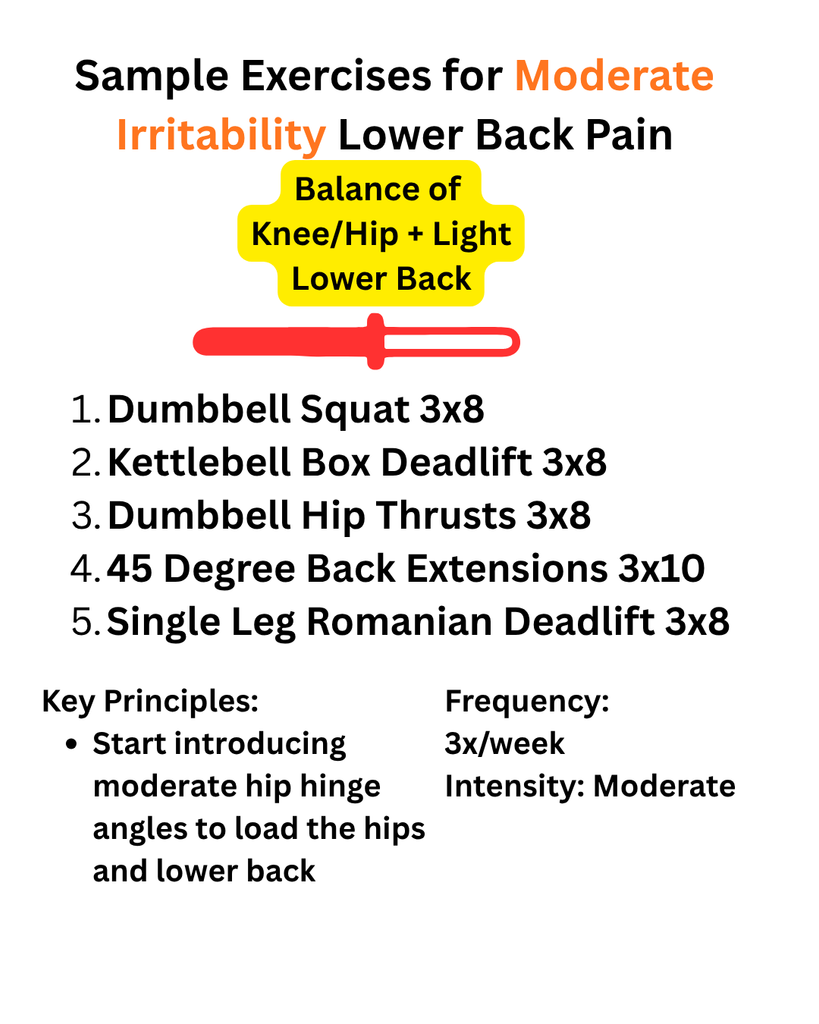
2. For Moderate lower back pain, you can start to challenge the lower back to some extent, but not quite full send.
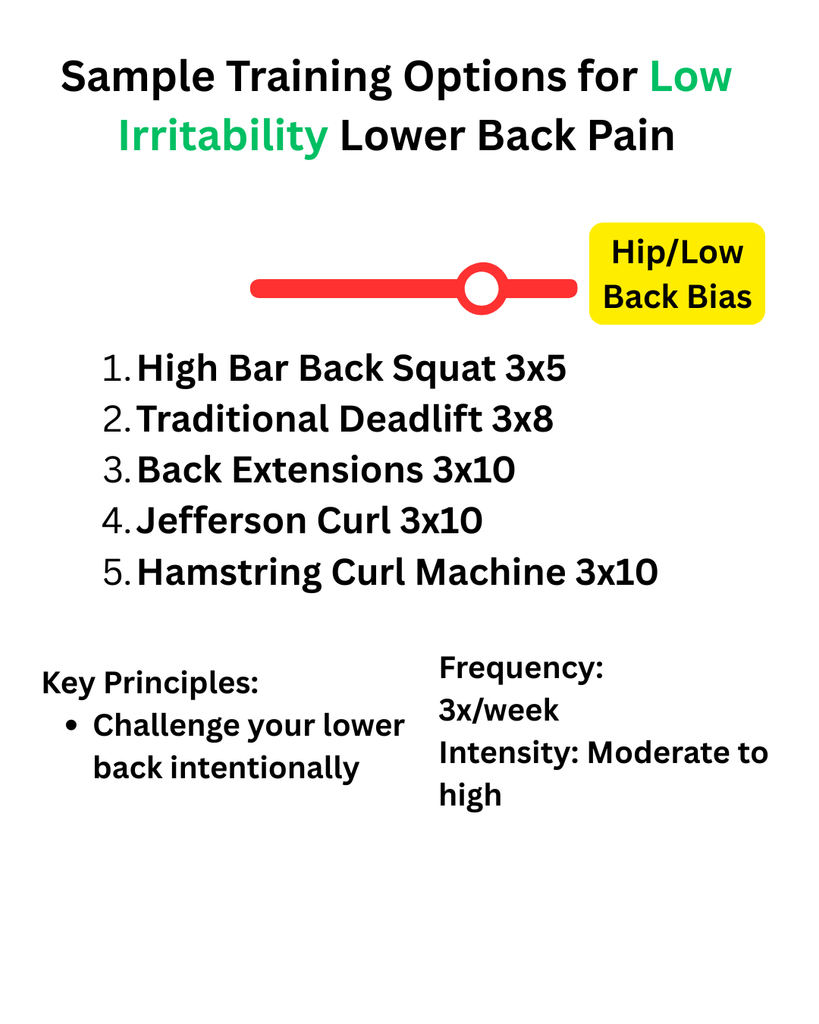
3. And with low irritability or mild lower back pain, you can start to more assertively challenge the lower back.
So initially yes it makes sense to avoid and protecet the injured and highly irritable area, but still try to train the nearby joints. Overtime the goal is to challenge it directly though, so we can restore your full mobility and strength.
Hopefully you found this helpful. But remember these are just generic examples, based on principles. Everyone’s situation is unique.
If you are looking for more personalized guidance on recovering from your lower back injury and getting back in the gym, reach out or schedule a Free Discovery Call so we can learn more about your unique situation.