

The answer to this question depends on a lot of individual variables and will be unique to your situation.
But in this article I cover key principles that help guide the decision making around how much pain during exercise is okay.
My goal is to help you understand pain better so that you feel better equipped to make decisions about continuing to exercise when injured.
In general, it is very good practice to continue exercising when dealing with pain or injury. The key is finding ways to do it that are tolerable to you, don’t make your injury worse, and don’t flare things up.
It is a common concern that when one experiences pain during exercise, that signifies something must be getting damaged. Believing this would naturally lead one to assume they should stop doing that exercise.
But it is quite a bit more nuanced than that.
Certainly pain can sometimes be a sign of damage. But very often it is not. It is simply information being processed by your nervous system as it gathers information from a variety of sources. To make it simple, you could call this “irritation”.
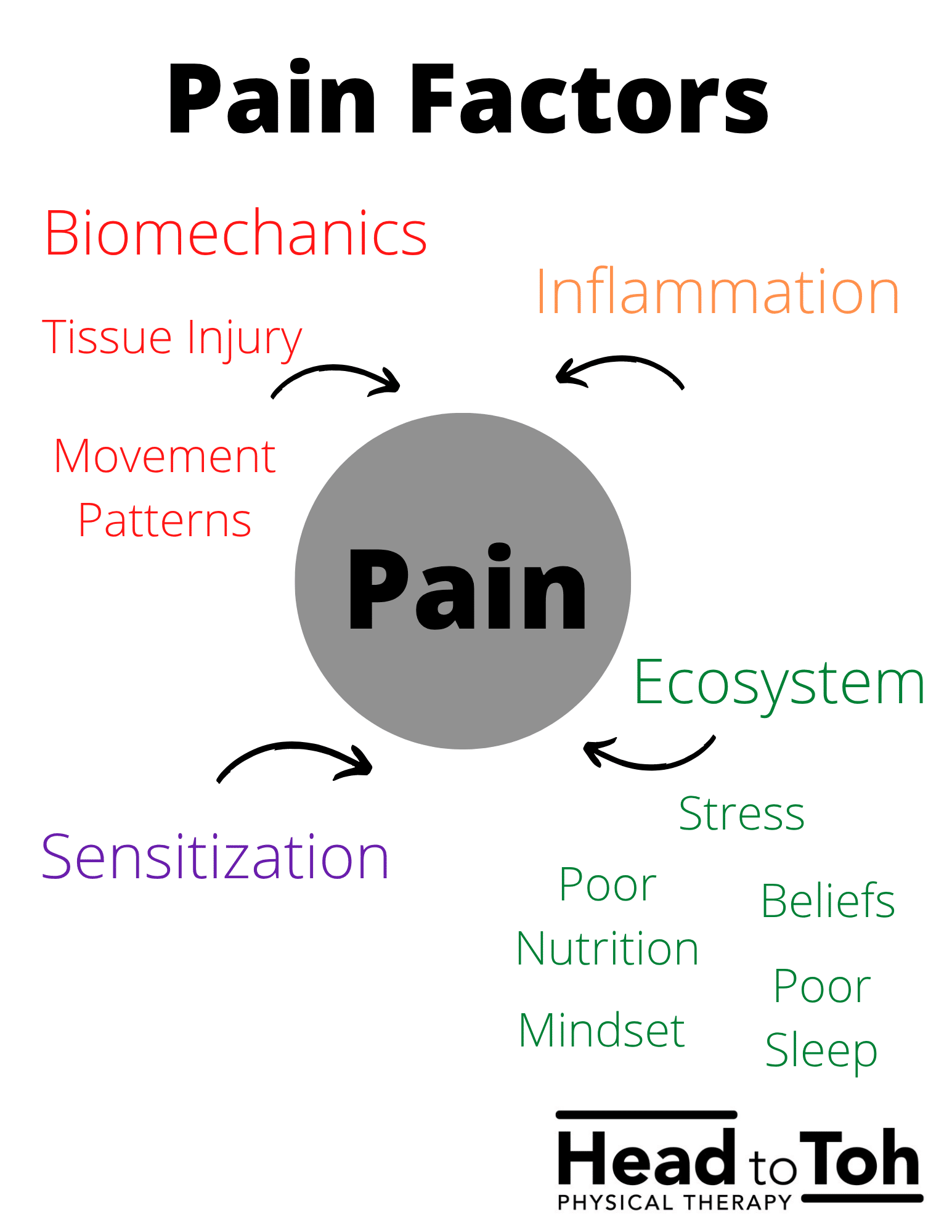
Here is a chart showing many other “non damage related” causes of pain.
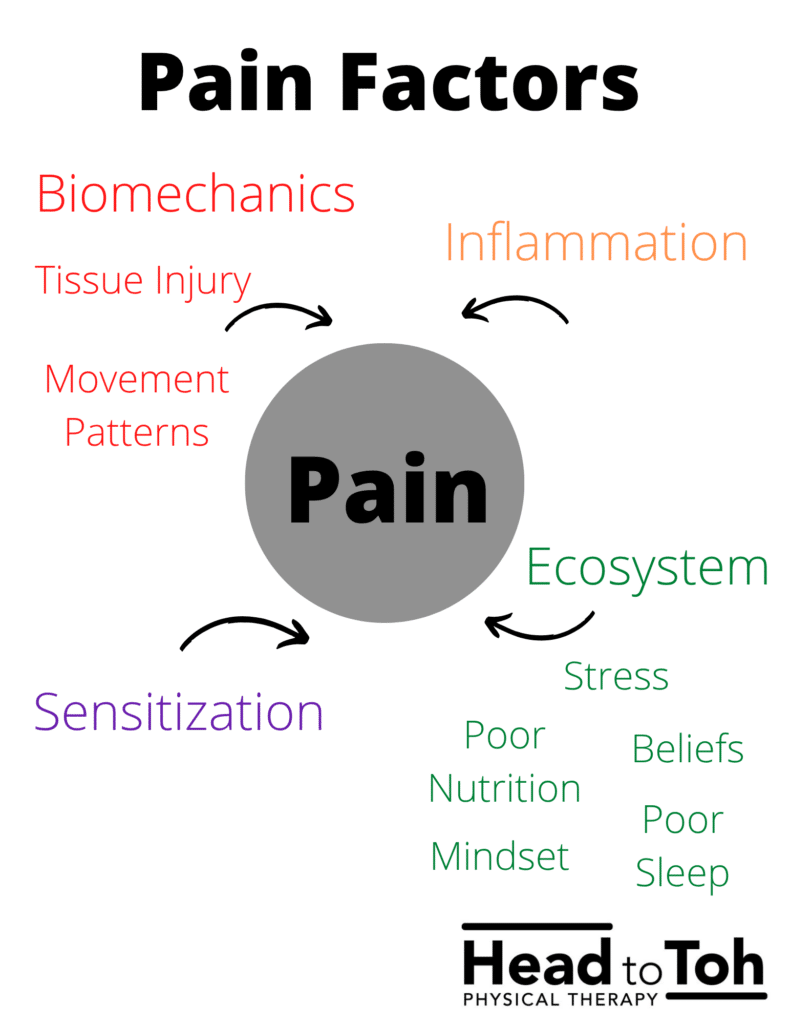
Differentiating when pain might indicate damage vs “irritation” is the key principle when deciding whether or not pain is okay to work through.
So how do you know whether the pain is happening as a result of damage or irritation? Here are a few key things to help differentiate between the two.
These are not hard lines in the sand, but signs that can point us in a direction of better understanding the nature of the pain.
Pain that is most likely due to irritation rather than damage is definitely safer to work through.
The point here is that we are not concerned that you will injure the area more. Rather, continuously irritating a sensitive area often just prolongs recovery, because if it never settles, it will take longer for you to get back to full training.
Thus it gives us some leeway to nudge the pain to an extent, within reason. Again, it’s okay to feel some pain, but not to the extent that it worsens a flare up and starts limiting how much you can do.
To put a number to this, my general guideline is 3/10 pain or less both during and after exercise. That is a pretty safe zone to be in. This number is on a subjective scale, so for everyone it may slide a little either way.
The principle behind this number as a guide is that it’s safe and sometimes helpful to nudge pain, so long as you don’t piss it off and flare it up.
Pain caused by damaged tissues does not mean you can’t exercise at all. It just typically means a little more caution and modification of how much exercise you do is warranted.
If you have questions about your specific pain or injury and you want to keep exercising, reach out for a Free Discovery Call so we can learn more about your unique situation.